
Early math activities form the essential foundation upon which all future mathematical understanding is built. When young children engage with numbers, shapes, patterns, and spatial concepts through playful, hands-on experiences, they develop neural pathways that support not just mathematical thinking, but problem-solving abilities that extend across all learning domains. The beauty of early math activities lies in their natural integration into everyday moments—sorting laundry, setting the table, or building with blocks all become opportunities for mathematical discovery. For parents and educators, introducing these concepts doesn’t require special equipment or extensive planning. The most effective early math activities emerge from children’s natural curiosity about the world around them. By recognizing and enhancing the mathematical potential in everyday play, adults can nurture confident mathematical thinkers who approach numbers with enthusiasm rather than anxiety.
The Critical Importance of Early Math Activities
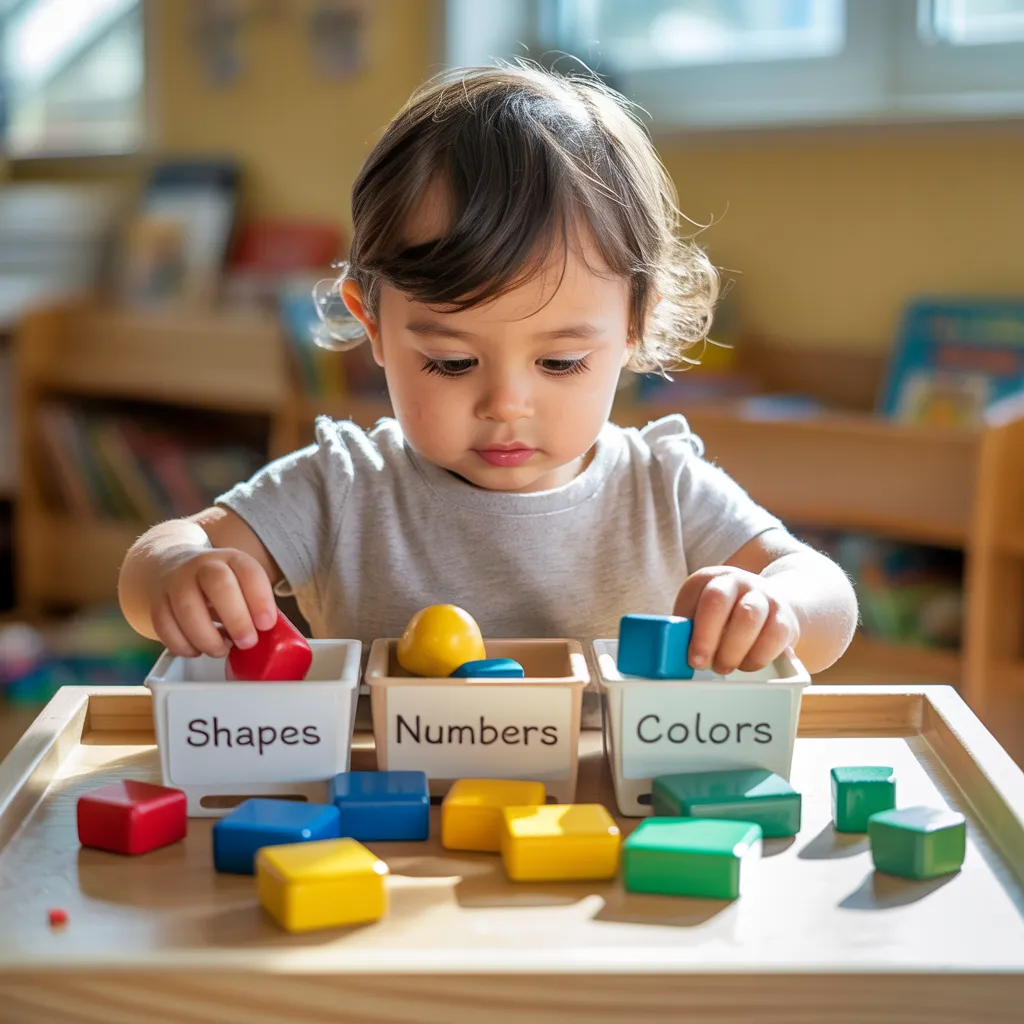
Research consistently shows that early mathematical skills are powerful predictors of later academic success—not just in mathematics, but across all subject areas. Children who develop strong mathematical foundations during their early years demonstrate:
- Better problem-solving abilities
- Enhanced logical reasoning skills
- Improved working memory
- Stronger pattern recognition
- Greater academic confidence
Early math activities build these foundations by engaging multiple senses and learning styles simultaneously. Unlike formal instruction, which might introduce math as an abstract concept, playful math activities allow children to construct mathematical understanding through direct experience.
The Brain Science Behind Early Math Activities
The developing brain is particularly receptive to mathematical concepts between ages 2-7. During this critical window, early math activities help form neural connections that lay the groundwork for more complex mathematical thinking. These activities stimulate areas of the brain responsible for:
- Numerical cognition: Understanding quantity and number relationships
- Spatial reasoning: Visualizing and manipulating objects in space
- Sequential thinking: Recognizing and creating patterns and sequences
- Logical reasoning: Making connections between cause and effect
By engaging in early math activities regularly, children strengthen these neural pathways, making future mathematical learning more accessible and intuitive.
Essential Early Math Activities by Developmental Stage
Toddlers (Ages 1-3)
For our youngest mathematicians, early math activities should focus on foundational concepts through multisensory exploration:
- Counting Songs and Finger Plays: « Five Little Monkeys, » « This Old Man, » and similar rhymes introduce number sequences and one-to-one correspondence.
- Sensory Sorting: Provide collections of safe objects (large buttons, fabric swatches, wooden blocks) for sorting by color, size, or texture.
- Shape Exploration: Offer shape puzzles, shape sorters, and shape hunts around the home to build geometric awareness.
- Simple Counting Games: Count steps while walking upstairs, count crackers during snack time, or count toys during cleanup.
- Fill and Dump Activities: Filling containers with objects and emptying them introduces concepts of volume, quantity, and spatial relationships.
Preschoolers (Ages 3-5)
As children develop greater language and cognitive skills, early math activities can become more intentional:
- Cooking Together: Measuring ingredients introduces fractions, volume, and sequencing.
- Pattern Activities: Creating and extending patterns with beads, blocks, or household items builds algebraic thinking.
- Calendar Time: Daily calendar routines introduce concepts of time, sequence, and number patterns.
- Board Games: Simple board games with counting spaces develop number sequence understanding and one-to-one correspondence.
- Environmental Number Hunts: Finding numbers on signs, mailboxes, and packages reinforces numeral recognition.
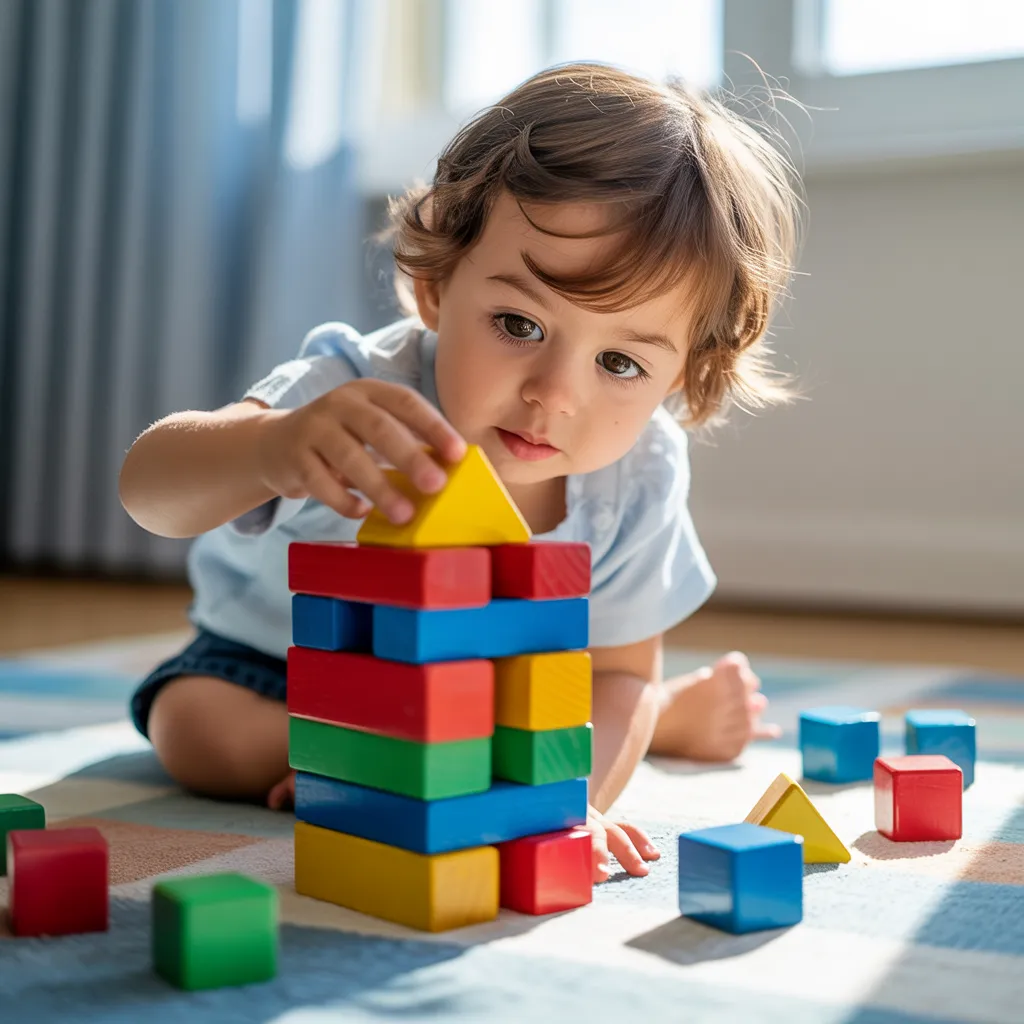
- Block Building: Constructing with blocks develops spatial reasoning, symmetry awareness, and early engineering concepts.

Early Elementary (Ages 5-7)
Children beginning formal schooling benefit from early math activities that bridge concrete and abstract thinking:
- Money Exchange Games: Setting up a pretend store enhances place value understanding and addition/subtraction skills.
- Measurement Projects: Measuring objects around the house with non-standard units (paper clips, hands) introduces measurement concepts.
- Graphing Activities: Creating simple graphs of favorite foods, weather, or daily activities develops data analysis skills.
- Number Line Games: Jumping along a floor number line helps visualize addition, subtraction, and number sequence.
- Shape Transformations: Folding paper shapes, creating tangram pictures, and building 3D structures develops geometric thinking.

Integrating Early Math Activities into Daily Routines
The most powerful early math activities aren’t standalone lessons but naturally incorporated experiences:
Mealtime Math
Mealtime offers countless opportunities for mathematical thinking:
- Counting place settings or food items
- Dividing food into equal portions
- Creating patterns with food items
- Using comparative language (more/less, bigger/smaller)
- Discussing shapes of different foods
Outdoor Math Adventures
The natural world is filled with mathematical possibilities:
- Counting trees, flowers, or animals
- Collecting and sorting natural materials
- Measuring shadows at different times of day
- Creating patterns with sticks, stones, or leaves
- Discussing distances and spatial relationships during walks
Bath Time Numeracy
Water play naturally lends itself to mathematical concepts:
- Exploring volume with different containers
- Counting bath toys
- Making patterns with foam shapes
- Discussing floating and sinking (early physics concepts)
- Introducing temperature concepts (hot/cold)
DIY Early Math Activities Using Household Items
Creating meaningful early math activities doesn’t require expensive materials:
- Number Cups: Write numbers on paper cups for stacking, sequencing, or filling with corresponding quantities of objects.
- Homemade Counting Books: Create personalized counting books using family photos or magazine cutouts.
- Pattern Blocks from Cardboard: Cut colorful cardboard into geometric shapes for pattern-making and design.
- Sorting Muffin Tins: Use muffin tins with sorting cards as a framework for classification activities.
- Measuring Sock: Fill an old sock with rice to create a flexible measuring tool for comparing object lengths.
Digital Early Math Activities Worth Exploring
While hands-on experiences should form the foundation of early mathematical learning, quality digital resources can supplement these experiences:
- PBS Kids Math Games: Free games featuring familiar characters that reinforce core math concepts.
- Bedtime Math App: Daily math problems designed for family conversation.
- Counting Parachute: A simple app focusing on one-to-one correspondence and number recognition.
Conclusion
Early math activities provide children with the essential foundation for mathematical thinking and problem-solving that will serve them throughout their lives. By integrating these experiences naturally into daily routines, parents and educators nurture not just computational skills, but a positive attitude toward mathematics. The key to success lies in maintaining the playful, exploratory nature of these activities—following children’s interests while gently extending their thinking. Remember that early mathematical learning is not about accelerating children toward formal algorithms but about deepening their conceptual understanding through meaningful experiences. Start with the simple suggestions outlined here, adapting them to your child’s interests and developmental level. With consistency and enthusiasm, you’ll help build confident mathematical thinkers who see the world through a lens of fascinating numerical relationships and patterns.
15 Powerful Number Recognition Games That Transform Early Math Skills
FAQ About Early Math Activities
Q: How early should I start introducing math concepts to my child? A: Mathematical learning begins from birth as babies observe patterns, relationships, and quantities in their environment. You can intentionally support this learning from infancy by using mathematical language (« You have two hands! »), singing counting songs, and providing opportunities to explore shapes and spaces. The key is keeping these experiences playful and appropriate to your child’s developmental level.
Q: My child seems to struggle with counting. Should I be concerned? A: Counting is a complex skill that develops over time. Children first learn the counting sequence as a memorized string of words before understanding that each number represents a specific quantity. If your child can recite numbers but struggles with counting objects accurately, provide more opportunities for one-to-one counting practice through games and daily activities. If difficulties persist beyond age 5-6, consider consulting with an early childhood specialist for additional support strategies.
Q: Are worksheets effective early math activities? A: While worksheets have their place in later math education, young children learn mathematical concepts most effectively through hands-on, multisensory experiences. Three-dimensional materials that children can manipulate provide stronger neural connections than paper-and-pencil tasks. If you do use worksheets, ensure they’re just one small component of a rich mathematical environment filled with concrete experiences and mathematical conversations.
Q: How can I support early math if I have math anxiety myself? A: Many adults carry negative feelings about math from their own school experiences. To break this cycle, focus on the mathematical thinking already present in your daily life—cooking, shopping, organizing, and problem-solving all involve mathematical concepts. Use positive language about math, express curiosity when solving problems together, and remember that early mathematics is about patterns, relationships, and logical thinking—not just computation.
Q: How do I know if early math activities are developmentally appropriate? A: Developmentally appropriate early math activities engage children’s interest, allow for active participation, build on existing knowledge, and provide just enough challenge to extend thinking without causing frustration. Observe your child’s response—sustained attention, questions, and attempts to extend the activity suggest appropriate challenge level. If your child seems disinterested or frustrated, simplify the activity or try a different approach that better matches their current mathematical understanding.
Ping : 30 Exciting Counting with Objects Activities That Develop Essential Number Skills - smartkidsprintable